

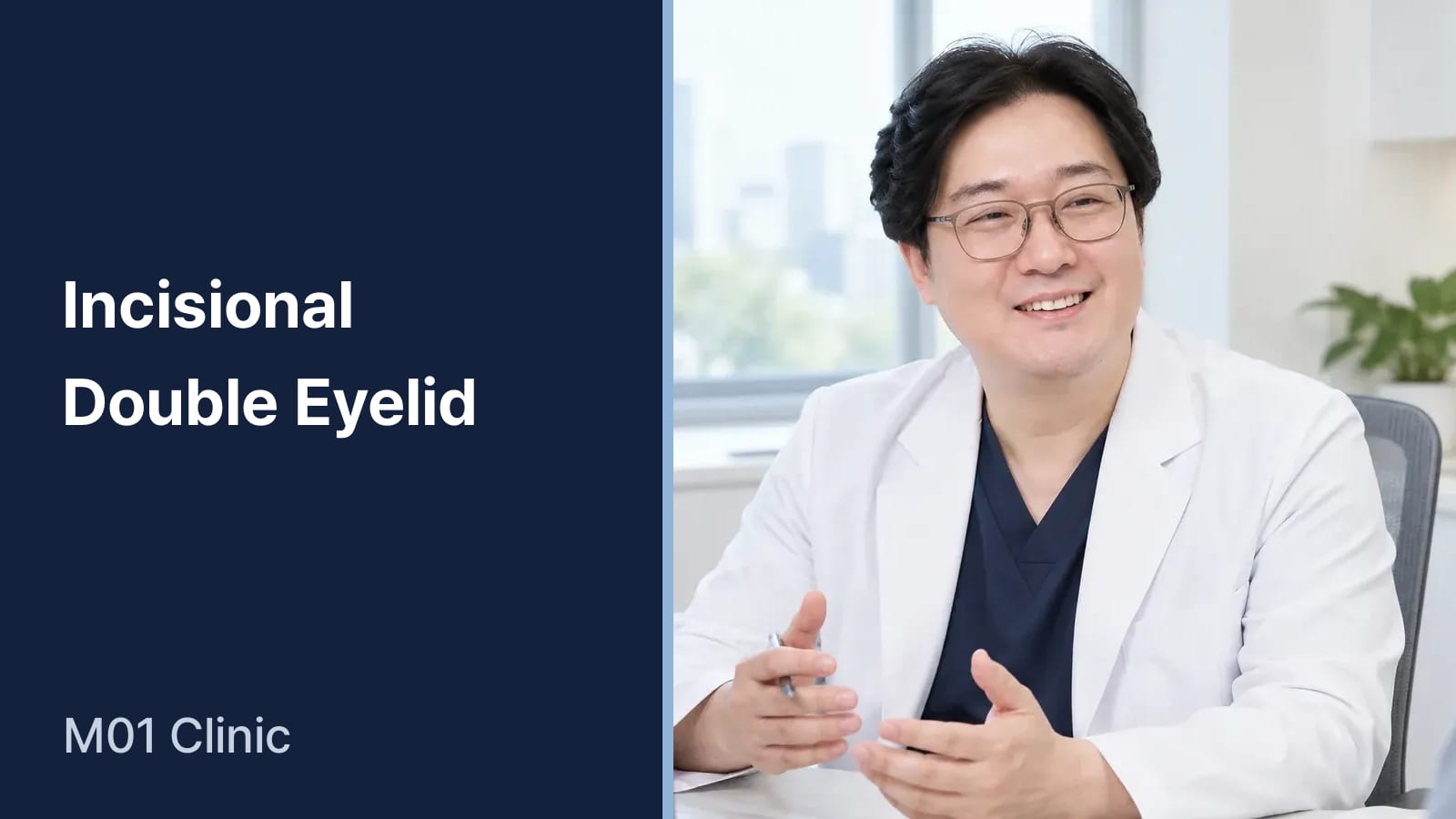
The most important thing international patients should know about incisional double eyelid surgery is that it is a surgical method in which the eyelid crease is created through an incision, so the choice depends on your own eyelid anatomy and goals, and it is decided at a consultation rather than in advance. M01 Clinic in Bupyeong-gu, Incheon, lists incisional double eyelid among its eye procedures within its plastic surgery department. This article explains what the term means and which questions are worth settling before you travel.

What is incisional double eyelid surgery?
Incisional double eyelid surgery creates or defines an eyelid crease by making an incision along the planned crease line. Because the eyelid is opened, the surgeon can work on the tissue beneath the skin as part of the same procedure when that is appropriate. This is the main difference from the buried-suture approach, which the clinic lists separately under the name double eyelid. Neither method is better in every case. Which one is considered depends on the thickness of your eyelid skin, the amount of tissue in the lid, the shape you would like, and what your surgeon observes during examination.
You can read the clinic's own overview on its page for Incisional double eyelid.
Is the incisional method right for everyone?
No. Suitability differs from person to person, and it is not something a website or a photo message can decide. People often ask whether the incisional approach or the buried-suture approach fits them, and the honest answer is that it is assessed in person. Your doctor will look at the eyelid structure, the way the lid opens, and your expectations about the final look. If a different approach is a better match, a good consultation should say so.
Which related eye procedures might come up at the consultation?
Eyelid concerns often overlap, so it helps to know the vocabulary. M01 Clinic lists several eye-area procedures, and some may be discussed alongside or instead of an incisional crease:
- Ptosis correction concerns how far the upper lid opens.
- Upper eyelid surgery and lower eyelid surgery address eyelid skin and surrounding tissue.
- Under-eye fat repositioning relates to the lower eye area.
- Eye corner surgery changes the shape of the inner or outer corner of the eye.
- Sub-brow lift concerns the brow and the space above the eye.
- Eye revision is for people who have had earlier eye surgery and want to talk about a further procedure.
Bring up everything you are curious about. The doctor can explain which of these, if any, are relevant to your eyes, and what a combined plan would involve.

What practical points matter for overseas visitors?
Eyelid surgery involves a healing period, and how long it lasts and how it feels vary between people. Because the schedule is set by your doctor, a visitor from abroad should ask early how the consultation, the procedure, and any follow-up visits fit together, and whether follow-up can be arranged around your return travel. The source information for this article does not describe interpreter services, airport transfers, visa help, insurance, or payment arrangements, so please confirm directly with the clinic before you plan anything around them.
Useful items to prepare for your consultation:
- Clear photos of your eyes from the front and side, taken in natural light.
- A short list of any previous eye or eyelid procedures, plus any medical conditions and medicines you take.
- Notes about the look you want, ideally with reference images, so expectations can be discussed concretely.
- Your intended travel dates, so the doctor can talk about scheduling in general terms.
What should you ask before deciding?
Good questions are practical and specific. Ask why the incisional method, rather than the buried-suture method, is being suggested for your eyes. Ask what the procedure involves, what the recovery period typically looks like, which risks apply to you, and what follow-up care is expected. Ask how costs are explained, since the clinic discusses fees at consultation and this article does not quote amounts. Results and recovery differ by person, and no one can promise a particular outcome, so treat any promise of certainty as a reason to ask more questions.
To ask about a consultation, you can call the clinic at 1588-2213.