

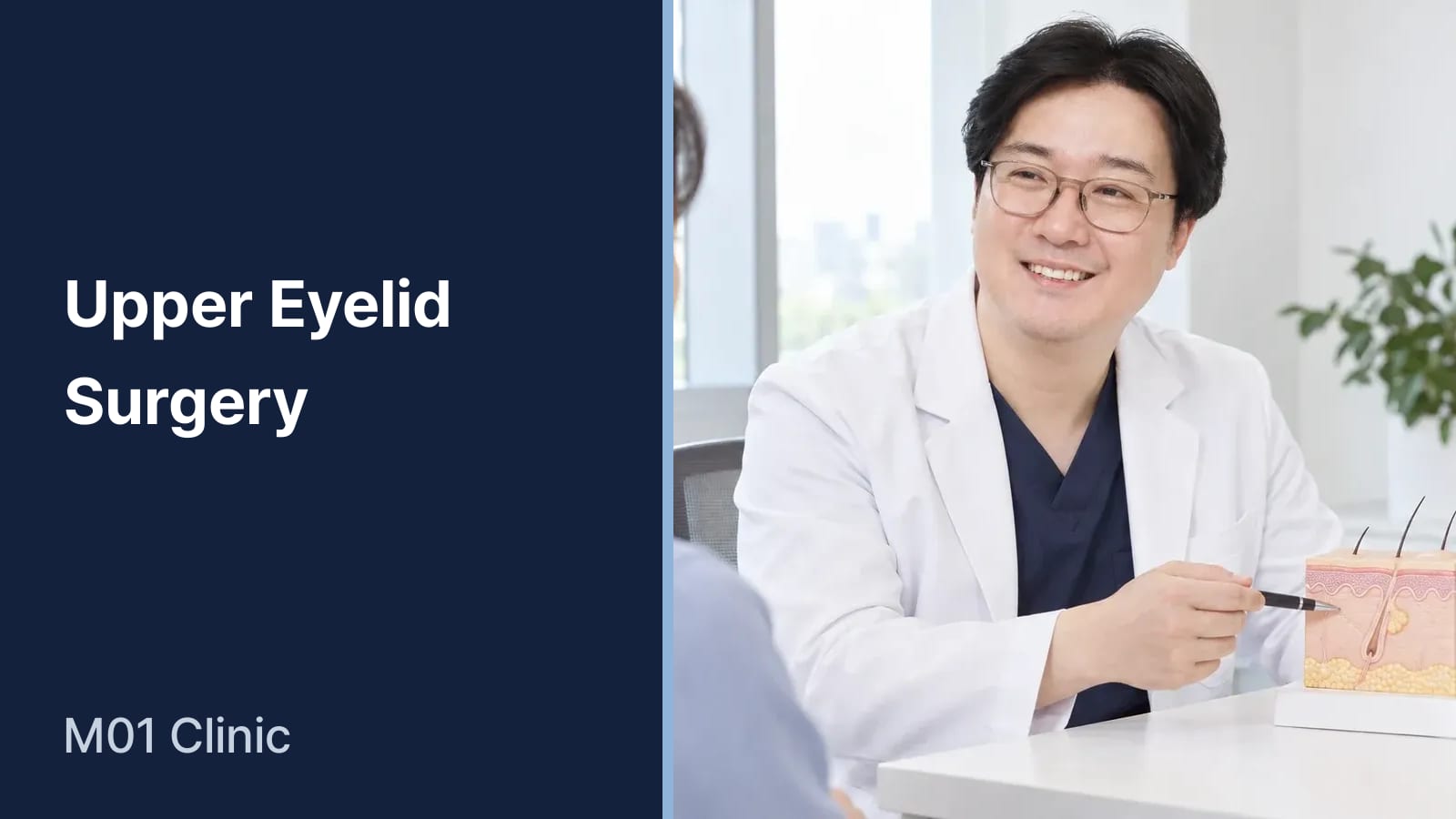
International patients considering Upper Eyelid Surgery should know that it is a decision best made through a thorough consultation about your own eyelids, your goals and your travel plans. M01 Clinic in Bupyeong-gu, Incheon, lists Upper Eyelid Surgery among its plastic surgery procedures, and this article explains what a visitor from abroad should understand and ask before booking a trip around it.
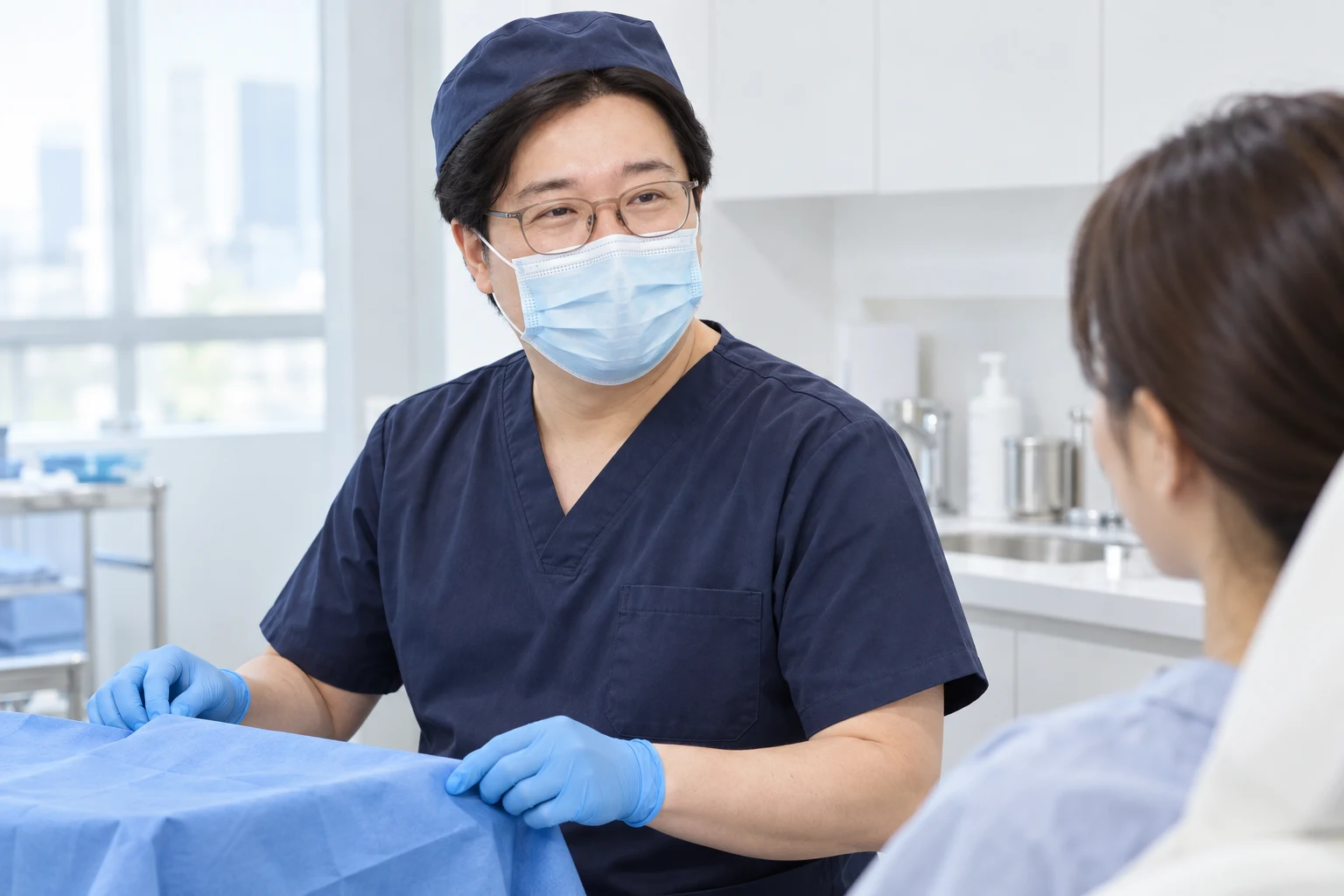
What is Upper Eyelid Surgery?
Upper Eyelid Surgery, often called upper blepharoplasty, is a procedure on the upper eyelids. In general terms, it addresses the skin and tissue of the upper lid, which can look heavy or loose in some people and can affect how the eyes appear or how comfortable the lids feel. What the surgery involves for a particular person depends on their anatomy, so the surgical plan is decided by the doctor after examination rather than chosen in advance from a menu.
You can read the clinic's own overview on its page for Upper Eyelid Surgery, which is the best place to start before a consultation.
How is it different from other eyelid procedures?
Eyelid concerns overlap, and several different procedures are listed at the clinic. Understanding the distinctions helps you ask better questions:
- Double eyelid and incisional double eyelid: these focus on creating or shaping the eyelid crease. Incisional double eyelid uses an incision-based method.
- Ptosis Correction: this relates to the position and opening of the eyelid, rather than extra skin alone.
- Sub-Brow Lift: this concerns the brow area and how it sits above the eye.
- Lower Eyelid Surgery and Under-Eye Fat Repositioning: these concern the area beneath the eye.
- Eye revision: this is for people who have already had eye surgery and want to review the result.
Many people are unsure which category their concern belongs to. That is a normal reason to book a consultation: the doctor can examine your eyes and explain which option, or which combination, is worth discussing for you.
Is Upper Eyelid Surgery suitable for everyone?
Not necessarily. Suitability depends on your eyelid structure, your health history and what you hope to change. Results and recovery differ from person to person, and no outcome can be promised in advance. A responsible consultation covers what the procedure can and cannot do, what the plan would look like for you, and whether another approach might fit better.
Bring a clear idea of your concern, any previous eye or eyelid treatment you have had, and a list of medicines or health conditions. If you have had surgery elsewhere, say so, since it may affect the plan.

What should overseas visitors plan for?
Travelling for surgery adds practical questions that a local patient might not face. Raise these at consultation so your schedule is realistic:
- Timing: ask how the visit is likely to be organised and how long the doctor suggests staying in the country. The schedule is set by your doctor at consultation and varies by person.
- Follow-up: ask what review visits are recommended and whether they can be arranged before you travel home.
- Your return journey: ask what the doctor advises about travelling after the procedure, including flying.
- Costs: costs are explained at consultation, so ask for a full explanation of what is and is not included.
- Communication: confirm in advance how language will be handled during your consultation, since the clinic's materials do not specify interpreter arrangements.
The clinic is in Bupyeong-gu, Incheon, so it is also worth checking the location against where you plan to stay and how you will get to appointments.
How do I start?
Begin by reading the clinic's Upper Eyelid Surgery page, write down your questions, and contact the clinic on 1588-2213 to ask about a consultation.