


International patients considering eye revision should know that it is a second procedure on eyes that have already had surgery, so the planning is different from a first-time operation, and M01 Clinic in Bupyeong-gu, Incheon, treats it as its own consultation topic. You can read the clinic's overview on the Eye revision page. This article looks only at what a visitor from abroad should understand and prepare to discuss, not at promises about outcomes.
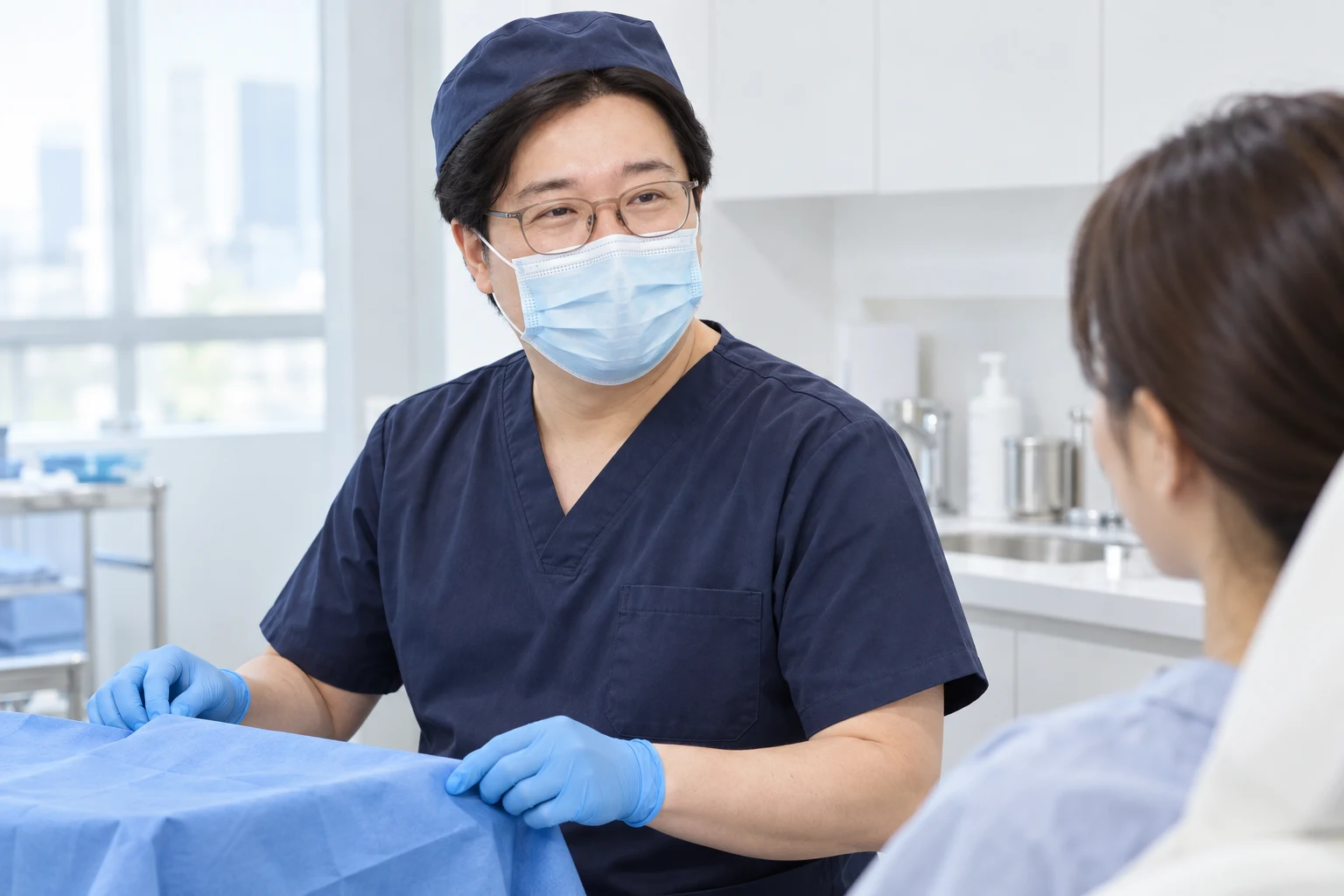
What is eye revision, and why is it not the same as a first eyelid surgery?
Eye revision means changing or correcting the result of an earlier eye procedure, such as a double eyelid operation or another eyelid surgery. It differs from a first procedure because the tissue has already been altered by the previous surgery, so the plan depends on what was done before. Your doctor decides at consultation whether revision is appropriate and what it would involve.
People look into revision for many reasons. The crease may look different from what they wanted, the two eyes may not match, the eyelid may feel uncomfortable, or their preferences may have changed over time. Whether any of these can be addressed, and how, differs from person to person and cannot be judged from a photo or a description alone.
The clinic lists several eye procedures that may be relevant to a revision discussion, including double eyelid surgery without an incision and incisional double eyelid surgery. It also offers ptosis correction, under-eye fat repositioning, eye corner surgery, upper and lower eyelid surgery and sub-brow lift. Which of these, if any, is relevant to your situation is for the doctor to determine after examining your eyes.
What will the doctor want to know about my previous surgery?
The doctor will want to understand what was done, how it was done and what concerns you now. The more precise the information you bring, the more useful the first conversation can be, because revision planning builds on the earlier operation.
Useful information to gather before you travel includes:
- The name of the procedure you had, for example an incisional or non-incisional double eyelid operation, as it appears on your records.
- Any operative or discharge paperwork you were given, translated into English if possible.
- Photographs of your eyes from before the earlier surgery, if you have them, and recent photographs in natural light.
- A clear description of what bothers you now and what you would like to change.
- Any medical conditions, allergies and regular medications, so they can be reviewed at consultation.
If you no longer have your records, say so. The doctor can still examine your eyes and talk through the options, although fewer details may limit how much can be planned in advance.
Can I ask questions before I travel to Korea?
Yes, you can contact the clinic by phone on 1588-2213 to ask your questions before deciding on a trip. This is a practical way to ask what the clinic would like to see and to learn how the first visit is arranged.
A conversation before travel has limits. A final assessment of an eye that has already had surgery generally needs an in-person examination, because the doctor needs to look at the eyelid and surrounding tissue directly. Treat any early contact as preparation, and expect that any recommendation may change once you are examined.
It also helps to decide in advance which questions matter most to you. You might ask whether revision is advisable at all, what the approach would involve, what the recovery period may look like for someone in your situation, and whether waiting longer after your first surgery would change anything. Your doctor can answer these only after reviewing your case.

What practical points should visitors from abroad plan for?
The clinic is in Bupyeong-gu, Incheon, and directions are on the Getting here page. Because revision is individually planned, it is sensible to keep your schedule flexible rather than fixing a return flight before you have met the doctor and understood the plan.
The clinic's materials do not describe interpreter services, airport pickup, visa assistance or insurance support, so do not assume these are available. If language is a concern, raise it when you call so you know in advance how communication will work during your visit.
Costs depend on the individual plan and are explained at consultation, not quoted in general terms. Ask what is included in any estimate so there are no surprises later.
If you want to learn more about how the clinic is organised, the site has pages on its doctors and its safety system. They describe the clinic's own approach and do not predict how any individual's eyes will turn out.
What should I keep in mind about results and recovery?
Results and recovery after eye revision differ from person to person, and no one can promise a particular outcome. Revision works with tissue that has already healed once, and the way it heals again can vary with your anatomy, the earlier procedure and your own healing.
A realistic consultation should leave you with a clear understanding of what the doctor thinks is possible, what is uncertain and what the alternatives are, including the option of not operating. If a plan feels unclear, it is reasonable to ask for it to be explained again or to take time before deciding. Rushing a decision about a second eye procedure, especially while travelling, is rarely helpful.
When you are ready, the simplest step is to call the clinic on 1588-2213 and ask what it would like to see before you plan a visit.